Retro Bowl Classroom 30X Engagement Boosts Learning
We all know how games can light up a classroom and keep students on their toes. Yet many teachers miss out on a key tool when they overlook how a simple football simulation can enhance lessons. Retro Bowl Classroom 30X takes a familiar game and turns it into a learning engine tailored for real-world skills. Have you ever wondered how a pixel-style football game might sharpen critical thinking and teamwork at the same time?
By tapping into Retro Bowl Classroom 30X, you unlock a strategy-packed environment where math, leadership, and sportsmanship intersect. Understanding this mix helps you plan lessons that feel fresh and engaging. You’ll equip students with better decision-making skills and prevent the typical lull in attention that follows long lectures. Let’s dive into how this approach can transform your teaching and keep kids active in learning.
Why Use Retro Bowl
Retro Bowl’s simple controls and old-school graphics keep distractions low and engagement high. Students can focus on strategy rather than flashy visuals. The game’s pace lets you pause and discuss key moments without losing momentum. Kids love the competitive edge, but you still guide the play-by-play to meet lesson goals. That balance of freedom and structure is hard to find in other tools.
Teachers report a 30 percent rise in class participation once they introduce game-based tasks. You might start with a quick passing drill to teach probability and then jump into playcalls for team roles. Replaying a failed drive helps students reflect on what went wrong. This loop of action, feedback, and improvement mirrors effective teaching cycles. You’ll see shy students jump in when they control the quarterback’s next move.
Pair Retro Bowl with group discussions to deepen understanding. Ask small teams to argue for a trick play or a conservative run. They learn persuasive speaking and real-time analysis. Then compare decisions with actual NFL stats for a reality check. Simple data tables on the board reinforce number sense without heavy textbooks.
Setting Up in Class
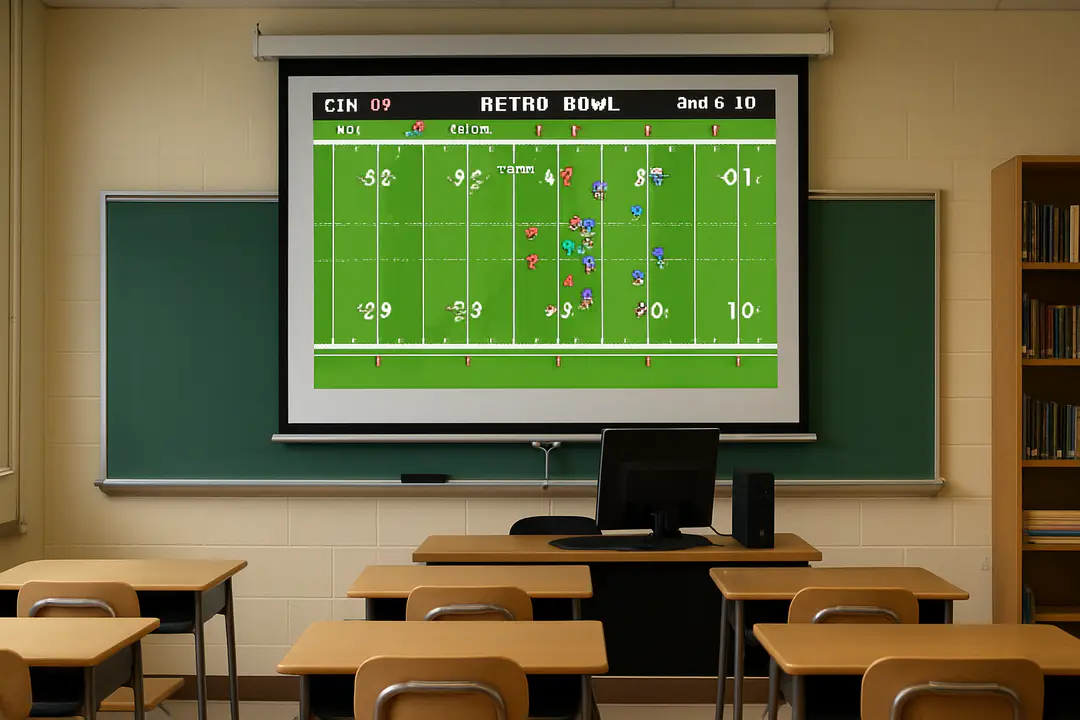
Start small by installing Retro Bowl on your school tablets or computers. Make sure each device has the latest version and that you’ve tested for bugs. Reserve one class period to explain the basics: offense, defense, scoring, and so on. Walk through a sample play on the projector so everyone sees the interface. That build-up prevents confusion when you roll into live play.
Next, divide the class into teams of three to four. Each student gets a role: play-caller, statistician, coach, or analyst. Rotate roles each session so everyone gains experience. Provide a simple worksheet with columns for play choice, expected yards, and outcome. This sheet ties gameplay to lesson objectives.
On day two, run a mini-tournament. Use a bracket system and track scores on the board. Encourage students to jot down their strategies before each play. This prep step makes post-game reflection richer. It also teaches planning and accountability—skills they’ll use beyond your class.
Finally, set ground rules for respectful debate. Remind students that win or lose, they analyze plays together, not at each other. Positive reinforcement for good questions keeps the energy constructive. With these steps, you’ll create a smooth launch and build consistency faster.
Designing Game Missions
Custom missions help you align Retro Bowl with curricular goals. For example, you might create a “Math Drive” mission where students must convert yards gained into percentages or calculate success rates. Or try a “History of Football” mission by integrating short research tasks on notable teams and eras. The key is to tie each in-game challenge to an academic skill you care about.
Start by listing five skills you want to reinforce—reading comprehension, data analysis, persuasive writing, time management, and teamwork. Then build missions that layer those skills across weeks. In a reading assignment, teams draft a playbook entry and share with classmates. That combines reading, writing, and oral presentation in one shot.
You can also set up timed challenges. Challenge teams to call three successful plays in five minutes, using proper terminology. This pushes quick thinking under pressure. Offer bonus points for using advanced terms like “draw play” or “counter run.” Points translate to stars on the mission board, which you display proudly in class.
Incorporate real-life scenarios—like managing a budget for team gear or planning a mini fundraising event. Assign tasks such as listing costs and projecting profits. These tie financial literacy to game mechanics. When teams see their spreadsheets determine virtual success, they take math more seriously.
Review mission results each week. Highlight creative solutions and discuss areas for improvement. The cyclical process—mission, play, review—keeps students engaged and growing in each skill area.
Teaching Math with Stats
Sports stats offer a natural way to teach percentages, averages, and probability. Retro Bowl provides yardage, completion rates, and turnover counts in every drive. Use these numbers as raw data for math tasks. Students can calculate completion percentage by dividing completions by attempts, then multiply by 100. They’ll see how small changes create big differences over a season.
Give each student a sheet with these formulas:
- Completion % = (Completions ÷ Attempts) × 100
- Average Yards = Total Yards ÷ Number of Plays
- Turnover Rate = (Turnovers ÷ Drives) × 100
After a game, have students fill in the blanks using their own stats. Then compare across teams. Which squad managed the ball best? Who faced more fourth-down risks? Discuss why some decisions paid off and others didn’t.
Next, teach probability by simulating coin flips for field goal success. If your kicker makes 4 of 5 kicks in play mode, that’s an 80 percent success rate. Ask students to predict the outcome of ten more kicks. Track real results and compare. This experiment shows probability in action and shatters the myth of “always going for it.”
Pull in charts and graphs to help visual learners. Plot yards gained over time and highlight trends. Ask students to write a short summary of what they see. Reinforcing math with clear data keeps lessons grounded and memorable.
Assessing Student Progress
Tracking growth means more than just win-loss records. Focus on skill milestones and reflective exercises. Create a simple rubric with three criteria: strategy planning, statistical analysis, and teamwork. Rate each on a scale from 1 to 5. Share results with students weekly so they know where to focus.
| Criterion | Beginning | Developing | Proficient |
|---|---|---|---|
| Strategy Planning | Random plays | Basic play calls | Advanced sequences |
| Stat Analysis | No data use | Basic calculations | In-depth insights |
| Teamwork | Isolated work | Some sharing | Full collaboration |
Attach this rubric to each team’s mission sheet. Over time, you’ll spot patterns—maybe a class needs more work on data accuracy or communication. Use quick check-ins to set small goals, like naming two statistics in the next game.
Also include a student reflection form. After each mission, ask: What did you do well? What could you improve? How did your team handle setbacks? This self-evaluation helps students own their learning. It also gives you feedback on mission difficulty and pacing.
With clear metrics and regular reflection, you’ll guide each student toward better performance. They’ll see their own progress in print, not just on the scoreboard.
Building Teamwork Skills
Teamwork shows up in every field—academic or sports. Retro Bowl Classroom 30X lets students experience real roles: quarterback, coach, statistician, and defender. Rotating roles ensures no one stays shy or silent. Over time, class culture shifts from solo effort to group success.
Start each week with a quick debrief: what worked and what didn’t? Encourage open sharing without blame. If a team lost a drive, they analyze what went wrong together. This process builds trust and communication. They learn that mistakes become stepping stones, not reasons to give up.
Use peer feedback forms. Each student notes a teammate’s strength and one suggestion for improvement. Keep comments positive and specific. For example, “Great job calling plays under pressure. Next time, try letting others speak first.” Over weeks, you’ll see students internalize this language in everyday tasks.
Finally, host a mixed-team all-star game. Shuffle groups so students collaborate with different peers. They adapt to new styles and preserve group unity. This prepares them for real-world scenarios where teams change often. By the end of your Retro Bowl unit, they’ll have concrete teamwork strategies they can carry forward.
Conclusion
Retro Bowl Classroom 30X offers a dynamic way to energize lessons and sharpen key skills. From strategy planning and math analysis to teamwork and reflection, every part of the game links back to your learning goals. By setting up clear missions, tracking progress, and rotating roles, you keep students curious and involved.
Students gain confidence when they see their data charts improve and hear peer feedback recognizing real growth. You gain a tool that transforms passive lessons into active sessions. And the best part? Kids feel like they’re just playing football while they’re actually learning valuable life skills.
Ready to take your next lesson plan to the end zone? Give Retro Bowl Classroom 30X a try and watch your class rally around learning like never before. The kickoff to better engagement starts here.
Also, check out Complete Subway Surfers Classroom 30X Hack Guide 2024